Captura Studio understands where you click, when you pause, and what matters - then turns raw screen
capture into a cinematic walkthrough. Perfect for: Product demos, Coding tutorials, Design
walkthroughs and more.
Auto Zoom
Smart Auto Zoom
Your clicks become cinematic moments. Captura Studio automatically detects mouse clicks and
keyboard actions, zooming in smoothly to keep viewers focused on what matters. No manual
keyframing required—just record naturally and let intelligent tracking create professional,
engaging content.
Intelligent Pan & Follow
Silky Smooth Pan & Follow
Your cursor leads, the camera follows—with physics-based animation that feels natural and
polished. Spring-damped motion eliminates jarring jumps, creating that premium feel viewers
expect from professional content. Move across your entire screen while keeping the action
perfectly framed.
Manual Zoom
Precise Manual Control
Take creative control when you need it. Add custom zoom range anywhere in your timeline,
fine-tune the scale and position, and craft exactly the visual story you want. Perfect for
highlighting specific UI elements or creating dramatic reveals in your tutorials and demos.
Record Camera & microphone & system audio
Capture Everything in One Take
Record your screen, face, and voice simultaneously. Position your camera overlay anywhere,
adjust the size, and capture system audio for complete context. Whether you're demoing software,
teaching a course, or creating social content—get everything you need in a single recording
session.
Video Edit & Cut
Non-Destructive Timeline Editing
Trim mistakes and tighten your content with intuitive scissor-based editing. Cut anywhere on the
timeline, delete unwanted segments, or merge clips back together. Your original recording stays
safe while you craft the perfect final cut—just like professional video editors.
Beautiful background and colors
Stunning Visual Polish
Transform raw recordings into visually striking content. Choose from gorgeous wallpaper
backgrounds, customize gradient colors, and add professional padding around your screen capture.
Make every video look intentionally designed, not just recorded.
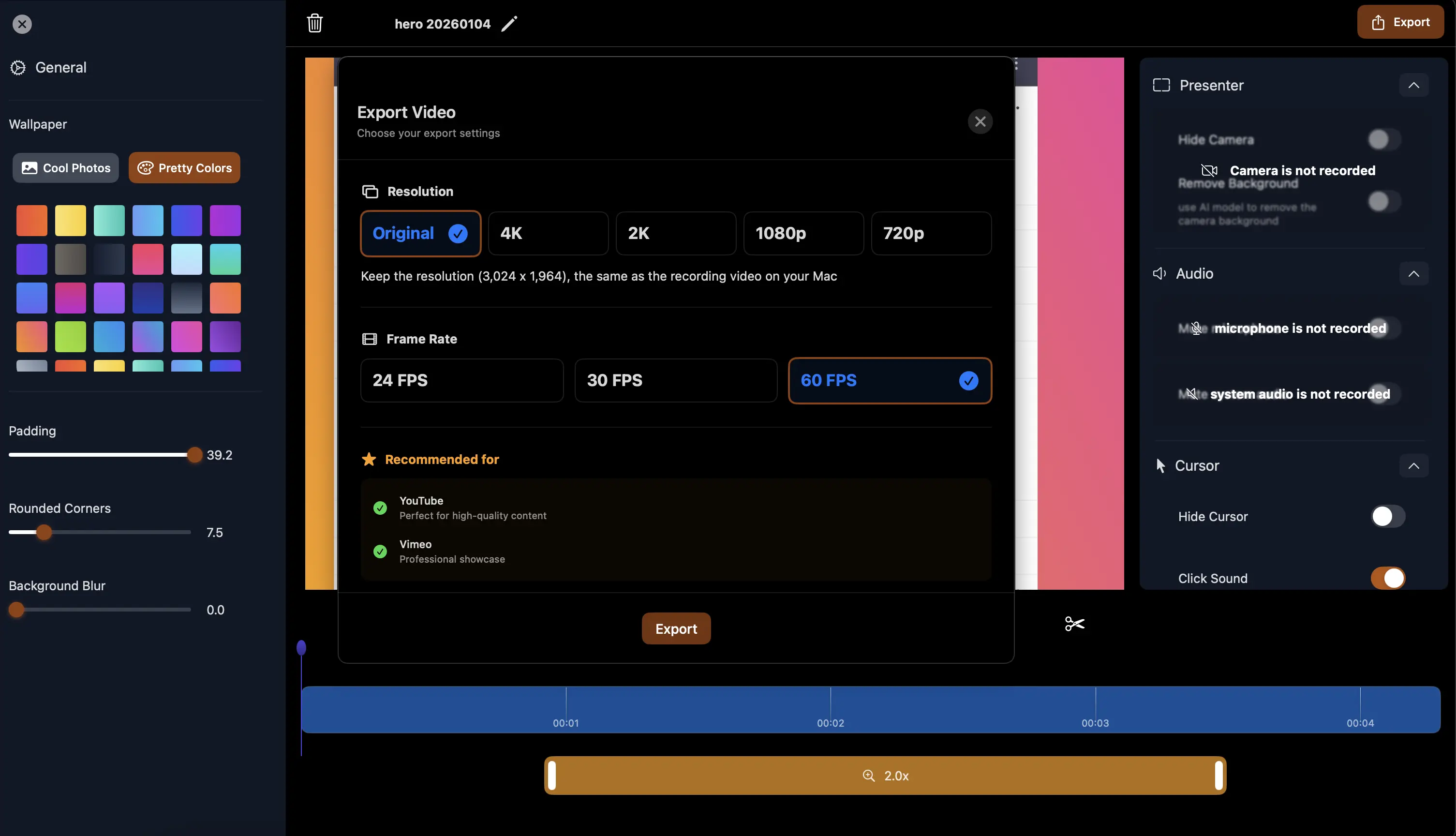
Export
Export Optimized for Every Platform
One-click export with smart presets for YouTube, TikTok, Instagram, and more. Choose from Best
Quality, High, Standard, or Fast Export options—Captura handles the resolution math, aspect
ratios, and encoding settings. Get professional results without the technical headaches.
Digital Literacy Paul Gilster Pdf Site
. Unlike traditional print media, where editors and publishers act as gatekeepers, the digital world allows anyone to publish content. Gilster argued that users must become their own editors. This involves "triangulation"—the practice of verifying a claim by finding it in multiple, independent sources—and a constant skepticism toward the source's intent and authority. Knowledge Assembly Gilster also introduced the concept of knowledge assembly
He argued that digital literacy requires We must be able to jump from idea to idea without losing the thread of the narrative. He saw this not as a destruction of attention, but as a new way of constructing knowledge. digital literacy paul gilster pdf
Gilster defines digital literacy as the ability to effectively use digital technologies to access, evaluate, and create information. It involves having a range of skills, including the ability to use computers, the internet, and other digital tools to communicate, collaborate, and solve problems. Digital literacy is not just about technical skills, but also about critical thinking, creativity, and social responsibility. Gilster defines digital literacy as the ability to
In 1997, hyperlinks were revolutionary. Gilster recognized that non-linear navigation requires a strong mental map. Without a linear narrative (page 1 to page 200), users get lost. He called this avoiding "digital vertigo"—the ability to navigate without losing your sense of purpose. users get lost.
We're Here to Help
Get real-time support from our community
Facebook Community
Join our Facebook group with creators, authors and developers. Get tips, share experiences,
and get support from fellow users.
. Unlike traditional print media, where editors and publishers act as gatekeepers, the digital world allows anyone to publish content. Gilster argued that users must become their own editors. This involves "triangulation"—the practice of verifying a claim by finding it in multiple, independent sources—and a constant skepticism toward the source's intent and authority. Knowledge Assembly Gilster also introduced the concept of knowledge assembly
He argued that digital literacy requires We must be able to jump from idea to idea without losing the thread of the narrative. He saw this not as a destruction of attention, but as a new way of constructing knowledge.
Gilster defines digital literacy as the ability to effectively use digital technologies to access, evaluate, and create information. It involves having a range of skills, including the ability to use computers, the internet, and other digital tools to communicate, collaborate, and solve problems. Digital literacy is not just about technical skills, but also about critical thinking, creativity, and social responsibility.
In 1997, hyperlinks were revolutionary. Gilster recognized that non-linear navigation requires a strong mental map. Without a linear narrative (page 1 to page 200), users get lost. He called this avoiding "digital vertigo"—the ability to navigate without losing your sense of purpose.