Basics


Info Download

Advanced

v/v
V
V

Plot Download

Curiously, Japan’s domestic market is so large and loyal that it often ignores global trends—a phenomenon called "Galapagos Syndrome." Physical Media:

Unlike Western stars who are expected to be polished from day one, Japanese idols are often marketed on their growth. Fans don't just buy a CD; they invest in the performer’s journey. This has created a hyper-loyal fan base and a sophisticated system of "Gacha" mechanics and handshake events that sustain the industry financially. Gaming: From Arcades to E-sports

The Japanese entertainment industry is a global powerhouse, a unique ecosystem where centuries-old traditions seamlessly collide with cutting-edge technology. From the neon-lit streets of Akihabara to the quiet majesty of a Noh theater, Japan’s cultural exports have transformed from niche interests into a dominant force in the global zeitgeist.

As the "Ota" fans performed their coordinated Wotagei dances in the pit, Kenji realized that this wasn't just entertainment. It was a shared ritual. The fans weren't just watching a show; they were participating in a collective dream of hard work and harmony ( Wa ).

Japan has long held a unique position in the global cultural landscape. While Hollywood dominates via blockbuster scale, Japanese entertainment has conquered the world through specificity, innovation, and the concept of Cool Japan . From the dizzying lights of Akihabara to the global dominance of anime streaming, the Japanese entertainment industry is a complex ecosystem that blends ancient tradition with hyper-modern trends.
Disclaimer: This tool is provided for educational and illustrative purposes only. No guarantee is made regarding accuracy, suitability, or performance. Use at your own risk. - Copyright: ufelectronics.eu / Andreas Dyhrberg

×
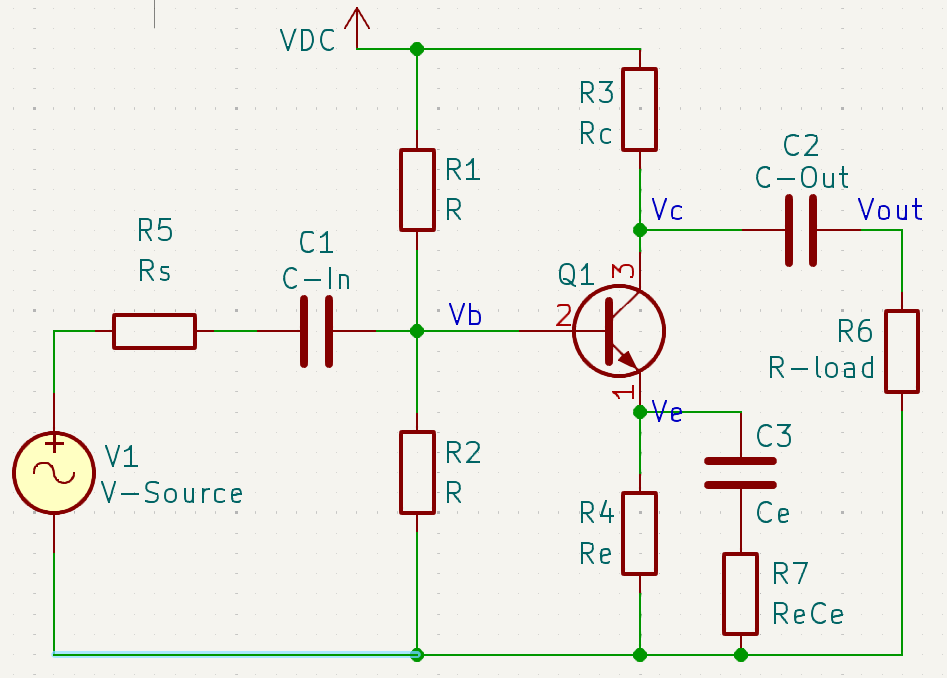
Amplifier Schematic
×

There are different ways to calculate an amplifier, depending on what you want to achieve.

Maybe you want to achieve a certain gain, as far as possible (classic mode). Or you have a low Vcc to respect (modern mode). Or you work with analog audio amps (symmetry mode).

Depending on what you want to achieve and the way of calculating it. Some fields might become dependent on others, or the other way around.

Your above choise makes some input fields available for manipulation, while hiding others.


🎯 1. Target Gain (Av) — "Classic mode" scop191 amateur jav censored full

You care about how much your amplifier multiplies the input signal.

Set desired voltage gain and Rc voltage drop. Best for learning and simple amplifiers.

You say: “I want a gain of 10.”
The app adjusts resistors to try and match that.
You must give Av and Vrc (the voltage dropped across Rc).

Best for common emitter amplifiers.

✅ Default choice for most beginners and educational use. Curiously, Japan’s domestic market is so large and


⚡ 2. Target Emitter Voltage (Ve) — "Modern mode"

You care about setting a healthy DC bias point.

Prioritize stable biasing via Ve. Useful for low-voltage circuits or precision designs.

You say: “I want Ve = 0.5 V, to keep the transistor out of trouble.”
This makes sure your transistor stays in active mode.
Gain becomes whatever it turns out to be.

Ideal for common emitter amplifiers when the goal is to ensure proper biasing for low-voltage or precision circuits, and it’s also used in class AB amplifiers to prevent distortion Gaming: From Arcades to E-sports The Japanese entertainment

✅ Useful in low-voltage designs (e.g., 3.3V systems).


🧭 3. Target Collector Voltage (Vc) — "Symmetry mode"

You want to place the collector in the middle of the power rail.

Target Vc = Vcc/2 for maximum signal swing. Great for audio and analog signals.

You say: “Make Vc = Vcc/2” for maximum swing.
Useful for analog audio amps or symmetrical headroom.
Gain and Ve are outcomes.

Best for common collector amplifiers and class AB amplifiers.

✅ Best for signal integrity.

Scop191 Amateur Jav Censored Fixed Full Today

Curiously, Japan’s domestic market is so large and loyal that it often ignores global trends—a phenomenon called "Galapagos Syndrome." Physical Media:

Unlike Western stars who are expected to be polished from day one, Japanese idols are often marketed on their growth. Fans don't just buy a CD; they invest in the performer’s journey. This has created a hyper-loyal fan base and a sophisticated system of "Gacha" mechanics and handshake events that sustain the industry financially. Gaming: From Arcades to E-sports

The Japanese entertainment industry is a global powerhouse, a unique ecosystem where centuries-old traditions seamlessly collide with cutting-edge technology. From the neon-lit streets of Akihabara to the quiet majesty of a Noh theater, Japan’s cultural exports have transformed from niche interests into a dominant force in the global zeitgeist.

As the "Ota" fans performed their coordinated Wotagei dances in the pit, Kenji realized that this wasn't just entertainment. It was a shared ritual. The fans weren't just watching a show; they were participating in a collective dream of hard work and harmony ( Wa ).

Japan has long held a unique position in the global cultural landscape. While Hollywood dominates via blockbuster scale, Japanese entertainment has conquered the world through specificity, innovation, and the concept of Cool Japan . From the dizzying lights of Akihabara to the global dominance of anime streaming, the Japanese entertainment industry is a complex ecosystem that blends ancient tradition with hyper-modern trends.